
BIODIVERSITY REGISTER (BMC)
🌿 BIODIVERSITY REGISTER (BMC) REPORT
MEPPADI GRAMAPANCHAYAT
Biodiversity Register (Revised Edition 2024) - At a Glance
📘 Brief Overview of the Publication
The People’s Biodiversity Register (PBR) of Meppadi Grama Panchayat in Wayanad district is an official repository that scientifically documents the local biological resources found within the panchayat area, along with the traditional knowledge associated with them. Wayanad is the first district in Kerala to complete the preparation of PBRs across all local self-government institutions, with the process being completed by around 2014. The PBR of Meppadi Grama Panchayat was prepared under the leadership of the Biodiversity Management Committee (BMC) of the panchayat.
📑 Main contents
| Chapter | Topic |
|---|---|
| 1 | Meppadi History |
| 2 | Landforms |
| 3 | Cultural Traditions |
| 4 | Biodiversity Overview |
| 5 | Reptiles |
| 6 | Valuable Medicinal Plants |
| 7 | Hills |
| 8 | Rivers & Water Sources |
| 9 | Birds |
| 10 | Agrobiodiversity |
| 11 | Rare Plants |
| 12 | Indigenous Peoples |
| 13 | Image Collections |
🌱 Importance of the register
- Serves as a baseline document for the conservation of local biological resources.
- Provides a scientific database to support the formulation of development plans.
- Documents local knowledge, traditional practices, and cultural heritage associated with biodiversity.
- Serves as a valuable resource for environmental education and research.
- Creates awareness among future generations about the importance of conserving natural resources.
- Agricultural Biodiversity: Traditional varieties of paddy with associated indigenous knowledge, along with crops such as coconut, arecanut, black pepper, and ginger.
- Wild Biodiversity: Medicinal plants, large trees, and wildlife found in the forest areas of Meppadi, including Chembra Peak and the Chooralmala–Mundakkai region.
- Aquatic Biodiversity: Local fish species and indigenous aquatic plants found in rivers and streams.
- Traditional Knowledge: Traditional healthcare and medicinal knowledge preserved by indigenous communities and elders.
- Domesticated Animals: Information on indigenous varieties of cattle, goats, poultry, and other domesticated animals found in the region.
📍 The Panchayat's flora and forest area
A significant portion of Meppadi is covered by evergreen and semi-evergreen forests, which support a rich diversity of flora and fauna.
- Shola Forests and Grasslands: The Shola forests and high-altitude grasslands found around Chembra Peak in Meppadi are rich habitats for rare plants and orchids.
- Medicinal Plants: Hundreds of rare medicinal plants, many of which are endemic to the Western Ghats, are found in the forest regions of Mundakkai, Chooralmala, and Choondal. These include medicinal species such as Dantapala and Pathathali, Amrith, as well as various wild roots traditionally used by the Kattunayakan tribal community.
- Rare Trees: Species such as Rosewood, Teak, Acacia, and various indigenous flowering trees grow abundantly in the region.
As Meppadi is located adjacent to the Wayanad Wildlife Sanctuary, its forest areas serve as a habitat for a wide variety of wildlife.
- Mammals: The forests are home to elephants, tigers, leopards, Indian gaur (wild bison), Nilgiri tahr—particularly in the Chembra mountain ranges—and the Malabar giant squirrel.
- Avian Diversity: The region provides a habitat for several bird species endemic to the Western Ghats, including the Great Hornbill, Nilgiri Wood Pigeon, and various species of forest birds.
- Reptiles and Amphibians: The forests are home to rare species of frogs found exclusively in the Western Ghats, including species that are observed particularly during the monsoon season. Various snakes, including vipers and the King Cobra, are also found in the region.
The agricultural wealth of Meppadi is characterised by a combination of plantation crops and traditional farming practices.
- Traditional Paddy Varieties: Meppadi cultivates several indigenous rice varieties unique to Wayanad, including the aromatic varieties Gandhakasala and Jeerakasala, as well as the medicinally valued Njavara and Chennellu.
- Plantation Crops: Tea, coffee, black pepper, and cardamom are widely cultivated in both large plantations and small-scale farms across Meppadi.
- Traditional Crops: Local farmers maintain a rich collection of Wayanad varieties of ginger, turmeric, kachil (greater yam), chembu (taro), and other tuber crops, reflecting the region’s traditional agricultural heritage and crop diversity.
Tributaries and streams of the Chaliyar and Kabani river systems flow through Meppadi, contributing significantly to the region’s aquatic biodiversity.
The Soochipara and Kanthanpara waterfalls, along with the numerous mountain streams, provide important habitats and breeding grounds for a variety of native freshwater fish and indigenous aquatic plants. These water bodies form an integral part of Meppadi’s natural ecosystem and support a rich diversity of aquatic life.
The biodiversity of Meppadi is currently facing serious challenges due to climate change, the risk of landslides, environmental degradation, and human–wildlife conflict. To protect and conserve this rich biodiversity, Biodiversity Management Committees (BMCs) are functioning at the local self-government level.
Agricultural Diversity
🌾 Major agricultural crops
- 🍃 1. Plantation Crops
- Plantation Crops: Large tea and coffee plantations are the most prominent feature of Meppadi’s agricultural landscape.
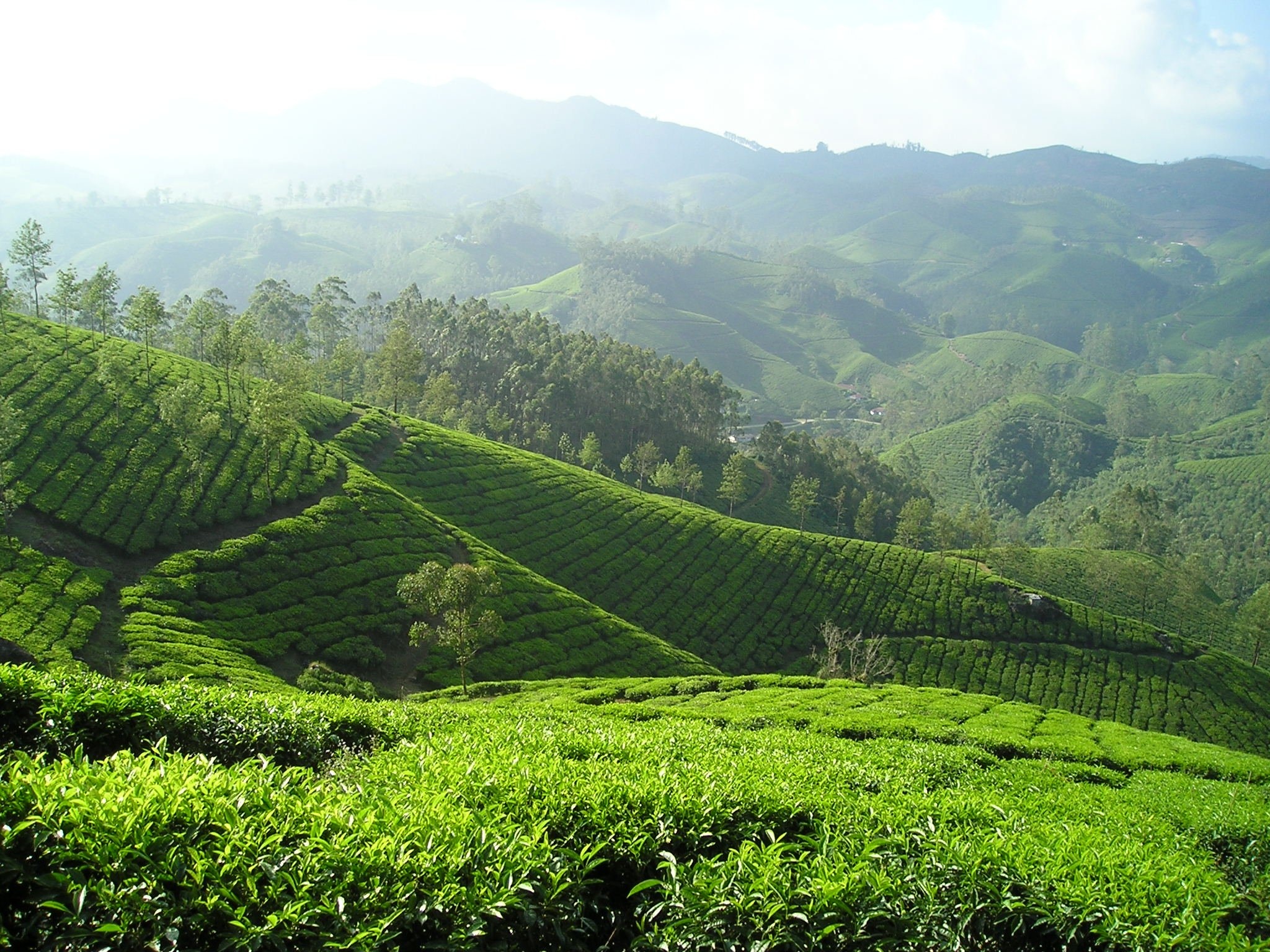
- Tea: Tea plantations are the primary livelihood for a large section of the population in Meppadi. The region is home to plantations operated by major companies such as Harrisons Malayalam.
- Coffee: Coffee is widely cultivated in both the Robusta and Arabica varieties. It serves as an important source of income for small-scale farmers.
2. Spices
Meppadi is also home to a rich variety of the world-renowned spices of Wayanad.
- Black Pepper: Black pepper is extensively cultivated in coffee plantations and homesteads, where the vines are trained on supporting trees.
- Cardamom: The cool, shaded highland areas of Meppadi provide favourable climatic conditions for cardamom cultivation.
- Ginger and Turmeric: Farmers in the region cultivate large quantities of high-quality indigenous varieties of ginger and turmeric.
3. Food Crops and Tuber Crops
- Paddy: In the valleys of Meppadi, traditional aromatic rice varieties of Wayanad, such as Gandhakasala and Jeerakasala, as well as the medicinally valued Njavara rice, are cultivated.
- Tuber Crops: Taro (chembu), greater yam (kachil), tapioca (cassava), and other traditional tubers are cultivated by indigenous communities and local farmers.
- Banana Cultivation: Various varieties of banana, including Ethapazham (Nendran) and Njalipoovan, are cultivated both as intercrops and as principal crops.
4. Fruits and Other Crops
- Arecanut: Arecanut is an important commercial crop cultivated in homesteads and mixed-crop farms across Meppadi.
- Exotic and Specialty Fruits: Farmers in Meppadi are increasingly and successfully cultivating a variety of exotic fruits, including rambutan, mangosteen, avocado, and passion fruit, adding further diversity to the region’s agricultural landscape.
Environment
🌳 Biodiversity and Environment
- Shola Forests and Grasslands: The Shola forests and grasslands found in the high-altitude mountain ranges, such as Chembra Peak, represent a unique ecosystem of the Western Ghats. These natural landscapes also function as important water reservoirs, helping to regulate and sustain the region’s water resources.
- Rare Flora and Fauna: The region is home to several rare and distinctive species, including the Nilgiri Tahr found in the Chembra mountain ranges, the Great Hornbill, endemic frog species found exclusively in the Western Ghats, and rare varieties of orchids.
- Water Resources: Numerous tributaries, streams, and rivers belonging to the Chaliyar and Kabini river systems originate in the mountain ranges of Meppadi, making the region an important source of freshwater for the surrounding areas.
Challenges
⚠️ Key issues
Recurring Landslides
- High Landslide Risk Areas: The regions of Mundakkai, Chooralmala, and Puthumala within Meppadi Grama Panchayat are highly vulnerable to landslides.
- The Puthumala landslide of 2019 and the devastating massive landslide that occurred in the Mundakkai–Chooralmala region in July 2024 highlight the geological vulnerability and ecological fragility of the area.
🚜 Unscientific Land Use
- The large-scale conversion of forest areas into tea and coffee plantations has resulted in the loss of the deep-rooted natural trees that once helped stabilise the soil, thereby weakening the soil structure and increasing its vulnerability to erosion and landslides.
- Monoculture plantations, such as rubber cultivation, can reduce the soil’s natural capacity to absorb and retain water, potentially increasing surface runoff and soil instability during heavy rainfall.
🏗️ Uncontrolled Tourism and Construction
- The construction of resorts, dams, artificial ponds, and other structures in ecologically fragile areas can disrupt the natural structure and stability of mountain slopes.
- During periods of heavy rainfall, the obstruction or alteration of natural drainage channels can increase water infiltration into the soil, raising pore-water pressure and potentially contributing to slope instability.
🌧️ Climate Change and Extreme Rainfall
- As a consequence of global warming and changing climatic patterns, Meppadi is increasingly experiencing episodes of intense rainfall within short periods, including conditions resembling cloudbursts.
- Such extreme rainfall can saturate the soil, increasing its weight and reducing its stability, which may result in the movement of large volumes of soil, rocks, and debris downslope.
🐘 Human–Wildlife Conflict
- Habitat fragmentation caused by the degradation and division of forest habitats has increasingly brought wild animals such as elephants and Indian gaur into human settlements and plantations.
- Such encounters pose significant threats to the lives, livelihoods, crops, and property of local farmers, making human–wildlife conflict an important environmental and social challenge in the region.
Instructions
✅ Safety instructions
Environmental scientists have warned that, in order to protect Meppadi’s fragile ecosystem, the recommendations of the Gadgil Committee Report should be duly considered and strictly implemented where appropriate. They have also emphasised the need to fully regulate mining activities on mountain slopes and large-scale construction projects in ecologically sensitive areas.
- The Biodiversity Management Committee (BMC) of the Grama Panchayat has an important role to play in this regard. With active community participation, the BMC should take the lead in implementing environmental restoration and conservation initiatives, while promoting sustainable management of Meppadi’s natural resources and biodiversity.
The People’s Biodiversity Register (PBR) is a comprehensive record documenting the panchayat’s natural resources, agricultural heritage, medicinal plants, and traditional knowledge, with the objective of conserving these valuable resources and passing them on to future generations.